Panel: WHAT CAN JOURNALISM AND FICTION LEARN FROM EACH OTHER?
MALCOLM KNOX (SMH, author): Writing fiction helped me to write fast. I’d written 7-8 complete novels before I’d walked into a newsroom, none of them published. Writing a million words without being published is a form of madness.
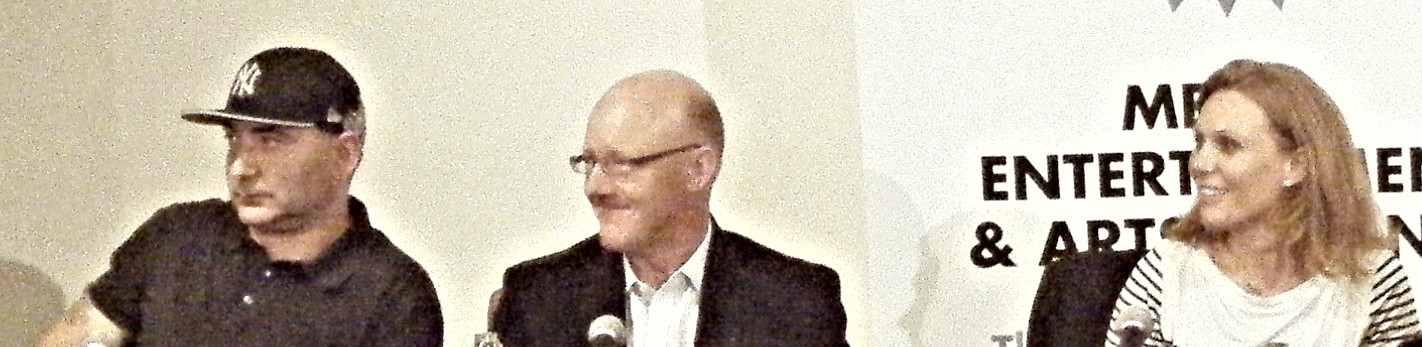
David Marr, Paul Barry, Anna Broinowski, David Leser
Panel: Paul Barry (4 Corners, Media Watch), David Marr (SMH writer, 4 Corners, Media Watch), David Leser (Good Weekend profile writer, author). Topic: Truth is stranger than fiction.
DAVID MARR: “I love people who invent their life stories, they fascinate me. But if they put the same amount of energy into their real lives, instead of being constricted in a web of lies, they could really get somewhere.”
Laurie Oakes, John Nichols, Malcolm Turnbull, Annabel Crabb, Quentin Dempster
MALCOLM TURNBULL: “Politics has always been vicious and nasty. From the latest tweet on Twitter to graffiti on a wall in Pompeii. You can’t complain. It goes with the territory.”
“The public are very discerning and don’t believe every caricature.
“Q and A is enormously important. There’s a decent chunk of time to be yourself, though it’s under adversarial conditions.”
Turnbull cited his legal experience as making him an expert on interrogation.
“They’re both friends of mine, but Laurie Oakes is a much better interrogator than Kerry O’Brien. Why? Laurie is much more forensic. He asks a question that demands a response, like a barrister.
Chris Masters – investigative journalist, Four Corners, ABC, author of Jonestown (about Alan Jones), Gold Walkley winner.
One of his most “perfect” stories, where everything worked pretty smoothly, was about the Rainbow Warrior bombing (which killed a man), and turned into a worldwide scoop on the French Government’s “state-sponsored terrorism”.
He had to fly to various countries and at one stage the French spies were so desperate to evade him that they sank their getaway yacht and got picked up by a submarine.
“For that story, one in 100, I was always in the right place at the right time.”
But for the other 99 stories, it’s “usually painful, every step of the way”.
“You’re extracting secrets – information that people are extremely resistant to give.
“[When you ring] they never say, ‘You beaut, I’ll put the kettle on.’ ”
“A lot of the battle is winning their trust. And you do that by being trustworthy. Eventually you’ll find some people who are eager to cooperate.”