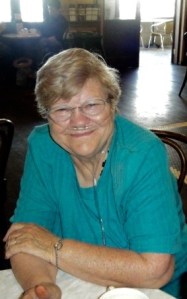
Mary wanted an upbeat celebration of her life, as she had been blessed with an incredibly wonderful and rich life. She often said it was the people in her life who’d made it so great.
EARLY YEARS
It all began in Leeds in 1939 — Mary was always proud of being a Yorkshire lass, with three other siblings, Patrick, Christine and Bernard, and her loving parents, Annie and Thomas. It was a terrible blow when her younger brother and sister died later on (“It’s like losing two legs from a table. The table is still standing but it’s a bit wobbly.”). Her memories of Leeds were of a close community of friends and cousins, especially Margaret, Pauline and Tony, who used to meet every Sunday morning after mass at the Holy Family Church with around 15 people in the room, chatting for hours. Mary was often asked to read aloud at school due to her lovely voice and reading skills and was very proud of a scholarship she won at 11 to go to a private girls’ school.
HEALTH INCIDENT 1
Soon after the family moved to Australia in 1951, Mary’s life dramatically changed when her dress caught fire and she went up in flames. She had third-degree burns to 40% of her body, in an era when that meant certain death. This incident made the Stop Press section of the Daily News. She spent a year in Royal Perth Hospital Burns Unit recovering and learning how to walk again. During this time she had an out-of-body life-death experience on the operating table, which she described as “peaceful” and left her never being afraid of death.
FAMILY LIFE
Mary met Len when they worked at Dalgety Wool Stores and she was impressed that Len had especially learnt to dance so he could court her.
Mary was always proud of her marriage of 57 years to Len, particularly for being a great father, his support for her university study, and for being her full-time carer for the past 11 years — driving her to church, hospital visits and many social engagements. They faithfully renewed their wedding vows at Christ the King in 2012.
Mary was a great mother, raising their five children, and was very proud they all gained university degrees.
The family often went out on boats on weekends, including an authentic Chinese junk, had fun holidays in New Zealand, Preston Beach and Pemberton, which always included fishing. Mary loved seafood and nothing above the legal size went uneaten, cooked on a campfire on a beach or barbecue.
She was always ecstatic whenever there was a family wedding or birth of a grandchild, loved family gatherings and giving big hugs to her grandchildren.
HOBBIES
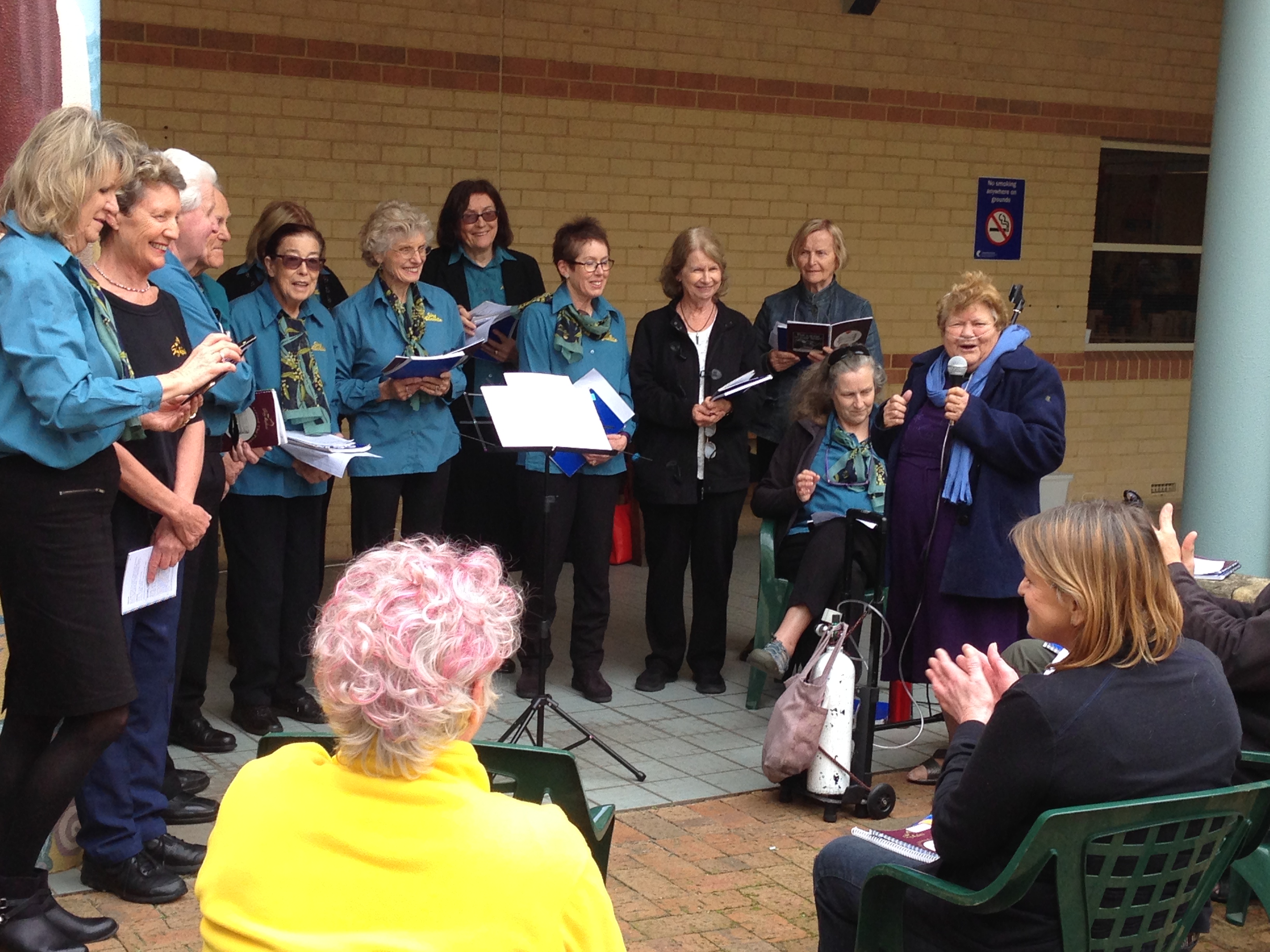
Mary had a beautiful voice and would often sing at full throttle while stopped at traffic lights with the windows wound down, around the house, and in church where she was often a dedicated choir mistress.
She loved the Dockers, knitting scarves to distract her from their terrible form during their first horrible 8 years, and always sang the team song, joined by friend Pat and family, with gusto.
CAREER
Work-wise, Mary’s first career was as an Avon lady, so she met everyone in the Hilton area as she pushed her pram and rang doorbells. While not keen on domestic tasks, Mary was enthusiastic about education and obtained three degrees, working as a librarian, and, at 57, as a teacher, locally and in the Pilbarra and Kalgoorlie.
She particularly enjoyed teaching juveniles at the Rangeview and Canning Vale remand centres, where the inmates often trusted her, and Mary was moved by their tragic life experiences.
COMMUNITY WORK
Mary enjoyed volunteering, where she met many of her friends, most who have passed on, and one of her favourite traditions was going to Fremantle Monument to have breakfast at dawn with her friend Connie, eating cheese and dates with a Thermos of tea, reflecting on the past year and musing about the future.
Jaka Covich was another life-long friend and beloved godmother — both shared a deep faith and raised five children, travelled and enjoyed fun outings to the beach, discussing the ups and downs of family life over many cups of tea.
Another great friend was Pat Dunn, and together they did St John’s first aid at the Big Day Out, many music festivals, big sporting events and concerts. She was particularly proud that in her 60s she was attending more music raves than the average 20-something.
Mary did a lot of volunteering, including as a catechist at Hilton Primary, president of Hilton Primary P&C, president of the Hilton Red Cross branch, and a member of the Christ the King and South Fremantle School boards, and Catholic Social Justice Committee.
HEALTH INCIDENT 2
In 2006, Mary realised she needed to contact the Perth Burns Unit again due to problems with her scars opening up. Due to extreme PTSD, the stress of contacting the Burns Unit caused a physical breakdown where she was near death with internal bleeding. She needed a heart-lung transplant to return to a normal life but she was too old to receive donated organs. She needed implants in her eyes, oxygen for her arteries and dialysis for her kidneys.
 She said in her mental health advocacy speeches that she found the mental challenges more difficult to face than the physical ones.
It would have been easy to surrender to self pity, but with the help of psychologists, her family and friends, Mary set small, achievable goals.
A major turning point was when she joined consumer groups advocating the mental health rights of psychiatric patients, and spoke at national conferences advocating the rights of patients with disabilities and mental health problems.
These included membership of Fremantle Hospital’s Community Advisory Council; Fremantle Hospital’s Consumer Advisory Group for mental health; the South Metropolitan Mental Health Advisory Team; and Royal Perth Hospital’s Dept of Psychiatry Consumer Advisory Group.
Whenever she ended up in ICU, Mary would always order off-the-menu, asking the canteen for chilli mussels, and insisting the family smuggle in hot fish and chips, much to the nurse’s consternation.
LATER YEARS
After Len moved to Braemar in March, Mary was on her own with little BB, a brave terrier who saw off any intruders. She kept busy and loved being taken to movies and plays, always brandishing her carer’s companion card, a “two-for-the-price-of-one” deal.
THANKS TO HELPERS

During Mary’s long 11 years of severe ill health, she would sew numerous gifts to show her appreciation to her many helpers. We’d like to sincerely thank everyone who assisted her during this very difficult time. It wasn’t always easy and patience was required.
INSPIRATION
As her parting wish, Mary said she wants us to be happy and to appreciate the world as much as she did, always looking for the silver lining, the bright and the beautiful, so, like her, our hearts will be inspired to spontaneously break out in song for the simple and wonderful joys in life.
Mary sang this song on her deathbed. It’s a humorous traditional Yorkshire song about dying for not wearing a hat and being eaten by worms and then ducks eat the worms and people eat the ducks.
She happily received the last rites and clutched her mother’s rosary beads in her final moments.
=======================================
WARD (Mary): 3 June 1939 – 2017 Passed away at 78, content with having lived a wonderful life.
She will be always be remembered for her beautiful singing voice, optimism, inexhaustible socialising, community work and deep faith. We will miss her great wisdom and advice gleaned from the pages of Shakespeare and Jane Austen. We will miss your big hugs. Heaven has a new choir mistress!
One of Mary’s favourite quotes:
“Each player must accept the cards life deals him or her, but once they are in hand, he or she alone must decide how to play the cards.” — Voltaire
“My life has been a happy one — and what made it happy was you.” — Mary
MARY’S SPEECHES
Mary was often voted best speaker at medical conferences, due to her often being the only one to address the Consumer’s experience. Also, she had attended Penguins, a public speaking group — in the early years of her marriage — to improve her advocacy efforts.
SPEECH 1 — MY STORY: THE MENTAL TOLL
My life has had lots of really fun times, which I very much enjoy, especially at Dockers’ games. I have also had really difficult situations, as have many. I believe I can claim to have dealt with more than most, and am still doing so.
My life suddenly changed when I was 13 and my dress caught fire – I actually went up in flames. I spend 12 months as an adult patient in the Royal Perth Hospital (RPH) Burns Unit. In those days the treatment for burns was staying in bed, which created significant physical weakness. My overwhelming longing was to go home. It was with real horror that I realised it would be many months before this was possible. The physical requirements for returning home were specific but hard to achieve, such as climbing eight stairs.
When I was finally discharged I attended outpatient clinics eight times a week.
Overall, my life went well. I eventually achieved professional qualifications and, aged 57, a teaching job. I enjoyed volunteering, particularly for St John’s First Aiders, and was very physically active – playing squash for over 40 years. I found it particularly dynamic teaching juveniles in jails. They were often illiterate and suspicious of authority but they trusted me and I enjoyed their company. What stunned me was how much violent death these young people had experienced. A 15-year-old could name six people their own age who were dead. Suicide, car crashes and drug overdoses were some of the causes. I believe their life expectancy is very short. Their stories touched me.
Some time ago, my burn scars started opening up and small pieces of white rock were coming out. I tried several doctors and rang the national help line to find out what it was but no one knew. They all directed me to the one place I wished most passionately to avoid – the burns clinic at RPH.
Reluctantly nine years ago I rang the RPH burns unit and was given an appointment for eight weeks’ time. I was extremely well but immediately after the telephone call I mentally and physically collapsed. I began having violent hallucinations especially when I was driving. I saw huge pieces of wood come hurtling through the windscreen, aimed at my face. I was dodging like I was in a 3-D movie. I had to keep pulling over and trying to calm down. I could not drive and my husband had to drive me to my casual teaching shifts, from Fremantle to Kalamunda. I also began violently jerking.
In those eight weeks, I gained 30 kg, and the closer it got to my appointment the more violent the physical jerking became. Also my eyes were misting up and getting worse daily. The colour drained from my face and lips: they became chalk white. I had the appointment and they identified my condition as heterotopic ossification. It is extremely rare — you are one in a million. No immediate treatment was required.
However, I requested help as I had stopped functioning.
Physically I was near death. By this time my family was frantic. I visited a doctor, she organised for me to be hospitalised, and I had urgent appointments with nine specialists over the next few weeks. The optician identified that the misting in the eyes was actually blood. I had been bleeding internally, resulting in widespread damage.
My arteries, eyes and kidneys were particularly affected. The various specialists could identify that damage had been done but could not explain how or why it had begun and had now ended. They blamed one thing, then another without identifying a cause. My respiratory and heart specialists agreed I had primary pulmonary hypertension – there are three cases per million — and they didn’t know what caused it.
After the physical damage, I had implants for my eyes, oxygen for my arteries and dialysis for my kidneys. I had no energy as oxygen does not flow easily through my body. I felt extremely fearful. The energetic carefree life I once enjoyed was finished.
I felt that my life was gone.
I had asked for help, an important step, and the burns unit had allocated a psychologist who identified PTSD. I found mental challenges were more difficult to address than physical ones because of their fluctuating nature. However, they had suggestions and I was advised to set small achievable goals.
I could do this.
- I utilised family and friends. They are a source of joy and vitality in my life.
- I asked for help.
- I tried to meditate — I still cannot do this.
- I volunteered to join a consumer advisory group for psychiatric ward 2K at RPH.
Joining the hospital consumer advisory groups was a turning point as it gave me a sense of purpose. I recognised that many of the young patients were similar to the juveniles I had met in jail. They are often vulnerable an unable to speak out for themselves. I can speak out for these people, as I feel passionate about their plight. I want people out of institutions, such as jails and hospitals (both places I hate), and into community-based care where research shows they have a much better chance of life and recovery.
In Trieste, Italy, where they closed many mental hospitals in the early 1980s, the suicide rate fell by 30 per cent.
Mental recovery requires a wide range of strategies, including seeking professional help. Recently, a third psychologist suggested meditation and I tried again. But instead of relaxing, my hands went rigid in a defensive pose and I was instantly alert, ready for fight or flight.
I will continue to try.
I know I must remain vigilant because my experience has shown me that mental recovery is much harder to define, reach, and maintain than physical recovery. Yet I really do find my life to be rich, satisfying and vibrant, and if all that I have endured are what it takes for me to achieve this, then I am proud and pleased to have made the journey.
++++++++++++++++++++++++++++++++++++++++++++++++++++++
SPEECH 2 – MY LIFE ON OXYGEN 13 October 2009
“WHAT ARE YOU DOING HERE?” – This was demanded of me by a man in his early 30s, well-dressed and well spoken. He repeated the words [with a slack jaw], he was really amazed. It was one o’clock in the morning at Sydney Casino and I was on my own (apart, of course, from my trusty oxygen trolley). I asked him what he meant, and he replied emphatically people on oxygen stay home. I didn’t respond. He asked me if I minded answering some questions. He must have been a medical professional because when I began to explain my condition, pulmonary hypertension, he rather snappily said: “I know what that is”. He also asked me my age and who was looking after me.
I think many people on oxygen do stay home, and it’s a shame because you really don’t have to. I had travelled from Perth to Sydney alone and had just been to see Phantom of the Opera at the Star Casino. I was looking for a cup of tea before returning via taxi to the YHA central Sydney where I was staying alone, except for the condenser machine in my room providing the night’s oxygen.
[NB: Me – Cotton — was in Sydney, driving Mum around with the oxygen tank in my car etc to various venues, such as a Dockers match, where we were detained for ages by Security due to explosion possibility of the oxygen tank. Mum was also verbally attacked at the footy match by a fan from the opposing team. She was an “easy” target and we had to sit in the Disability spot, which was amid the other team’s fans. As soon as I’d walk away, some weirdo would accost Mum, due to her disability and inability to make a quick escape.]
How did this happen?
They say life begins at 40, however my life took a very different and unexpected turn — a real about-face. When I was in my late 60s a specialist said I would need to be on oxygen for the rest of my life, 24/7. I’m sure it is universally expected that when we breathe we don’t need to think about it, everything works, unless there is some logical explanation – such as asthma or having been a heavy smoker. I had had neither of those problems.
For some reason, when I breathe my lungs don’t give my blood the oxygen it needs. I have asked several specialists why this is so and generally they don’t know. Some say it might be my heart — but overall my heart and blood pressure are fine. It is not my lungs because they could replace them and I would still be the same. They took almost 2 litres of fluid from my right lung cavity in the early days of my diagnosis.
For most of my life –me being nearly 70 now — my blood had ample oxygen and I was able to take part in lots of activities including playing squash (for over 40 years), water aerobics (twice a week), and walking (for around an hour most mornings).
I also belonged to a range of volunteer groups including St Vincent de Paul, public speaking groups, school boards and was very involved as a St John ambulance volunteer.
I have been fortunate in having good health for almost all my life and have enjoyed a very active life — brought up a family of five children all who graduated from university. I was injured as a child and began my professional career at age 37 when I entered TAFE and gained entrance to university, eventually completing three qualifications. I had a lively professional career in libraries and teaching computing in high schools.
Most of these enjoyable activities were stopped in one fell swoop as I received the information that I would require 24/7 oxygen.
I regard the oxygen as a nuisance but it is not the end of my life. I have been determined to live as normally as possible. I go to the gym, Perth casino, movies, shows, my beloved Dockers’ home AFL games and also the interstate ones when I visit Sydney and Melbourne. I enjoyed my trip last year, I’ve been travelling several 1000 kilometres by plane to Sydney and Melbourne from Perth.
Travelling with oxygen is an interesting experience. It requires a lot of planning and determination on the part of at least one person, and preferably two or three. Here are a few points I consider important:
1. don’t think about the oxygen too much, just regard it as a nuisance that can be relatively ignored
2. get a support team — and appreciate their efforts
3. plan where necessary and ensure that people/firms do their part.
Before my illness, I was going to Seniors aquarobics twice weekly. When I became less mobile I reluctantly cut this out and took up yoga.
Then an unusual condition developed from my initial injuries as a teenager over 50 years ago and I became very stressed at having to return to Royal Perth Hospital’s burns unit to access information and treatment. I learnt this condition, heterotopic calcification, is not life threatening or dangerous, however it is unpleasant and stressful. This began about the same time I found that I was unable to walk more than a few metres at any one time.
When this happened I had to carefully plan so I could keep up with my professional workload. I did go to the doctor but she was unable to suggest any reason why I could not walk any distance and suggested I continue to try. My own theory is that my brain tried to get more oxygen for my muscles and when this did not work it sent messages not to use them, so they refused to work.
My past exercise program
After my burns when I was a teenager, I found my scars required regular movement to stay supple. If I didn’t exercise for a few weeks, the muscles — particularly in my left arm which had some of the deepest scar tissue — would become weak and stiff. I had difficulty climbing stairs and kneeling even while still in my mid-teens.
I therefore made sure I exercised at least twice a week. I played a range of sports — playing netball until after my marriage. I also swam regularly. I tried tennis after the birth of my first child and found that I could not lift my arms to serve well enough. I loved squash and played in competitions for well over 30 years, into my 60s.
My huge and very quick weight fluctuations would be up to 33 kilos in just a couple of months. In July August 2006 I experienced a sudden gain of about 32 kilos. I volunteer for the divisional offices of St John’s Ambulance but for the first time I could not undertake the fitness test of 15 minutes of CPR. I did not know of any possible cause, but I did know I was in real difficulty. I could still walk on the treadmill but all other exercises were not really possible because I was so uncomfortable.
I was determined to pass a fitness test and tried a range of activities. I was able to do yoga classes at my local gym.
I also loved exercising to music and enjoyed a range of hourly sessions — when I became this active a few years ago I took up aquarobics and usually attended twice weekly. I walked with a friend about five times weekly until I was unable to walk. I was able to walk on the treadmill at my local gym and still do this regularly.
I could not stand up without pulling myself up using a bar, which caused real difficulties for a few weeks. I persevered and suddenly I lost weight and became more flexible. I lost about 33 kilos in eight weeks and was fit and well. I took my First Aid certificates in 2007 and Advanced Level One certificate, completing the fitness component with my usual ease.
By March that year I was working full time teaching at high school and enjoying life. I was attending regular sporting and cultural events as a first aider and belonged to several volunteer organisations. One of my conditions took an unexpected turn and I had to go back to Royal Perth Hospital — the site of my trauma — and I gained all the weight back again almost instantly. Over the next few months my general mental and physical condition deteriorated. I saw a psychologist weekly through the hospital burns unit for post-traumatic stress disorder, and I still do.
I was too ill to continue working — my face, especially my lips, had gone chalk white. I went to see my doctor. She said to take time off work and have a range of tests. She arranged for me to visit specialists who then referred me to others – after five specialists, I felt like I was being passed around like a parcel.
One day a specialist arranged for me to have a test using a treadmill — the team conducting the test said it was too dangerous for me to undertake, given my current condition. I stated that I’d been on a treadmill for 30 minutes the previous night at the gym. They continued to maintain that I should be in hospital. When I refused to go to hospital they rang my daughter and said her mother was not taking her condition seriously.
I did go to hospital a couple of weeks later and underwent a series of tests. My body was seriously bloated with fluid. They decided to take some fluid out of my right lung cavity to reduce the stress on my heart, which was almost two litres of clear fluid. Almost like a balloon, I lost about 35 kilos within the next few weeks, while taking the same fluid tablets that I had been taking for the previous 10 years.
My current exercise program
I have battled to create an exercise program since my diagnosis.
Specialists said that it was too dangerous for me to undertake any exercise program and my heart was in real danger. I gained permission to go under hospital supervision and enrolled at Fremantle Hospital (which took about three months). Permission for this was rejected at the last moment and I was devastated. I did persist and was able to start a regular session (twice a week) at a leading WA hospital. The physiotherapists there have been most professional and extremely helpful.
Recently I visited a heart specialist for advice about my blood pressure and managing heart disease. He was very concerned about my potassium levels being too high, and my blood pressure. He changed my medication and we discussed my going in the pool at the gym. Two eminent specialists had told me going into the water put my heart in real danger. They said my lungs do not work properly and the pressure of the water could damage my heart. This was a particular blow, as I love water exercises.
I decided to try some light exercise — sitting on the pool steps up to my waist and doing leg exercises and running on the spot. I’m very careful to exercise arms and legs separately. The heart specialist said this was a safe practice and suggested I walk in the water to reduce my blood pressure. I was also having discussions with hospital physios about the safest practice and pace.
I have gradually built up a routine to about 45 minutes and generally attend the Next Generation gym, usually twice a week.
My routine:
- sitting on the steps (about waist deep)
- exercise my legs for about 10 minutes
- exercise my arms for about 10 minutes
- enter the water (which is up to my lower chest)
- run and jump for about 30 minutes.
After a month of gradual buildup to this level, I saw Dr Latcham again in February and he was happy with the improvement in my blood pressure and potassium and did not need to see me again. I am continuing these exercises.
I also attend the PH clinic/gym at RPH twice a week.
My first thought when questioned by the gentleman at the casino in Sydney was: “You don’t know the people in my physio clinic because they are often people on the move. They go on cruises, fly in planes and attend a range of functions. I go to functions.”
Sometimes the condition shows up unexpectedly. I was at a craft group recently and we were cutting the ends off small cardboard containers. Some of those there were significantly older than me and completed this easily. I was otherwise occupied and when finished I went to begin my creation. I got the knife that everyone had been using and the container and began to cut but nothing happened! I looked at the container and it was not cut. I tried again — still nothing happened. I stood up to put more oomph into the action and still nothing happened. I got angry and stabbed the knife at the cardboard and a small jagged hole appeared. I realised I had insufficient strength in my arms for me to make a cut in the cardboard.
I was at an AFL match, I’m still an avid Fremantle Dockers supporter, when I was approached by a young woman carrying a one year old who asked if she could sit next to me. As there were several empty tables and chairs and no one else sitting there but me, she had obviously sought me out. I replied “of course” and she asked me questions.
She remarked several times how well I looked and asked me what I did. Like the other medical gentleman in Sydney, she said that generally people on oxygen stay at home, so being out and about was a real achievement. I told her of my activities, especially my exercises in the water. She commented that this was extremely radical. She said she was a physio and would be commenting and discussing my activities, abilities and attitude with her patients.
I’m planning to take my trusty oxygen to the Eastern States again in the next few months and increase my activities here. I am doing volunteer computing teaching to Seniors. I am trying to increase my exercise program and take up yoga again. The reality is that although some things are quite difficult, most things are possible if you concentrate on doing what you can and leave all the rest to chance or later capabilities.

 Cotton Ward